


If you’re an international student coming to the UK to study (from the EU or somewhere further afield), we get that it can be a bit overwhelming – especially if it’s your first time at uni. Recent studies show that the majority of overseas students are undergraduates, so there’s a good chance this is you!
From visas and tuition fees, to health insurance and bank accounts, there’s a lot for international students to consider about student life in the UK – so we’ve broken it down in this step-by-step guide.
-
Plan your funding and research scholarships
Our first point of advice for international students in the UK is that you need to make sure you have the finances to fund your degree.
The funding available to you depends on where you are in the world and the date you enrol at uni.
Previously, students from the European Union (EU), the European Economic Area and Switzerland were able to access Student Finance the same way UK students can. And then Brexit happened…
EU students, students from the EEA and Swiss students
From the academic year 2021/22 onwards, EU and EEA students are considered overseas students.
This means that, unless individual universities decide to set their own fees for EU students, new (not continuing) EU/EEA students who started university in the UK on 1st August 2021 or later must pay the same fees that students coming from outside Europe do.
EU and EEA students who enrolled at a UK university before the academic year 2021/22 are eligible for Student Finance in the UK as they were when they first started studying, meaning the cost of their tuition fees is covered by a loan that they’ll pay back at a later date. You can find more info on that in our guide to Student Finance for EU students.
Students from outside Europe coming to the UK
Students from outside the EU (apart from in certain specific circumstances) have never been eligible for Student Finance in the UK, no matter when you started your degree.
You’ll have to fund your degree yourself, and you’ll often have to pay fees much higher than what UK students pay – anything from £10,000 – £35,000 a year.
Don’t forget that for your visa application to be successful, you’ll need to provide evidence that you can cover this cost, as well as your living expenses.
If you don’t have the money to pay for yourself, there are options available. In our guide to international student funding and scholarships, we cover loads of opportunities that you might be eligible for, and you could also look into education loans or exchange programmes.
For more information on how much tuition fees cost for international students in the UK and eligibility criteria for UK Student Finance, check our guide to tuition fees for international students.
-
Organise your student visa
Credit: Megan Eaves – Flickr
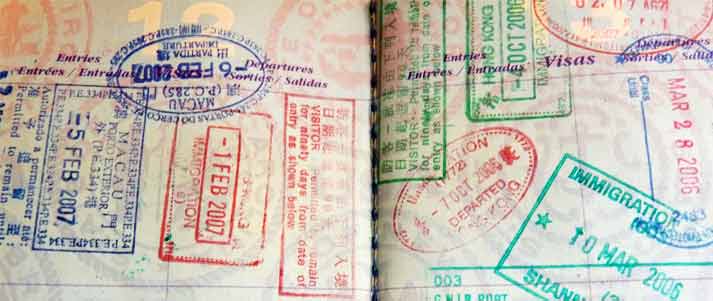
As an international student coming to the UK, you might need to apply for a visa, depending on which country you’re from.
EU students, students from the EEA and Swiss students
On 1st January 2021, things changed for students from the EU, the EEA and Switzerland coming to the UK.
Until 31st December 2020, these students didn’t need a visa to live and study in the UK. If you were living in the UK before 31st December 2020, you should have been able to apply to the EU Settlement Scheme, which allows you to work, study and access benefits and services broadly on the same basis as you could prior to Brexit.
If you moved to the UK after 31st December 2020, you will now need to use the following information on student visas.
Students from outside Europe coming to the UK
If you’re from a country outside the EU and the EEA (excluding Switzerland), you’ve always needed to apply for a visa to study in the UK.
If you’ll be studying in the UK for less than six months, you’ll need a Standard Visitor visa. Note that you cannot work in the UK if you have this visa, unless it’s an elective (i.e. an optional placement as part of a medicine, dentistry or veterinary medicine course). If you want to work during your stay, you’ll need to apply for a Student visa (more on this below).
You can also apply for a Short-term study visa if your course is between six and 11 months (but no longer), if you’re 16 or over and you’ll be studying an English language course. Crucially, this means a course where you’ll be learning about the English language, not just a course that’s taught by lecturers speaking English.
Standard Visitor visas cost £95 and Short-term study visas cost £186.
Student visas
If your course lasts for longer than six months (or less than six months but you want to work), you’ll need a Student visa, which has replaced the Tier 4 student visa.
These are some of the documents you’ll need for your student visa application:
- Confirmation of Acceptance of Studies (CAS) – This is a 14-digit reference number you’ll receive from your university once you accept your offer.
- Proof of finances – You’ll need to prove that you have enough money to pay for your first year of tuition fees. On top of this, you need to prove you have £1,023 (£1,334 for those studying in London) per month for up to nine months to cover your living expenses. This can either be through self-funding, an official sponsorship or an education loan.
- English language skills – You’ll have to prove you meet the minimum level of English language proficiency, usually by taking a Secure English Language Test (SELT).
The Student visa costs £348 if you’re applying from outside the UK, or £475 if you’re already in the UK and want to extend or switch to this visa.
You may also have to pay a healthcare surcharge as part of your visa application. This costs £235 for six months or £470 for the whole year, and will allow you to use the NHS.
If you’re applying for a student visa from outside the UK, you can apply up to six months before you start your course, while you have just three months if you’re applying from inside the UK (and you must apply before your current visa expires).
Although you could get a response within a few weeks, it’s best to apply as soon as possible to make sure. Here’s a list of visa processing times for each country.
-
Prepare for British life
Culturally, the UK is very diverse and welcoming of people from all around the world. You’ll find plenty of other international students at all universities, and most will have societies to help you meet like-minded people and those from similar backgrounds.
We would also recommend searching for Facebook groups related to your university (they often have groups specifically for international students in the UK) so you can discuss any questions you have and even make some friends before you arrive!
In case you weren’t already aware, the UK is known for its cold and wet weather. Pack lots of warm clothes and a waterproof coat for the winter months, and don’t expect summer to be very hot very often.
It’s not student budget (or environmentally) friendly to have the heating on all the time either (although we have tricks to help you save on your energy bills), so warm clothes are essential.
-
Sort your student accommodation
You’ll want to get your accommodation sorted before you land in the UK – the last thing you want is to turn up and have nowhere to stay.
Your first port of call should be your university itself, as they will often offer guarantees to house all students who apply before a certain date.
Most students either live in university accommodation (called ‘halls of residence’, or ‘halls’ for short) or rent a room from a private landlord.
Living in halls is best for your first year of study, as it removes the hassle of trying to find a suitable room elsewhere, and some universities even have halls specifically for international students to help you make friends easily.
These will either be self-catered (meaning you’ll have access to a shared kitchen to cook your own meals) or catered (meaning your meals will be provided at a canteen). If you’re looking to save some money, self-catered is by far the cheaper option, and we have loads of student recipes and even a student meal plan to help you develop your culinary skills.
Unlike American universities, the vast majority of rooms both in halls and private housing are single occupancy – meaning you won’t have a roommate, but a room to yourself instead.
If you’re not interested in halls and you’d prefer to do the accommodation hunt yourself, head to our student letting agents directory to find houses in your university area, and consult our guide to viewing student houses so you know what to watch out for.
And, of course, if you’re not sure where you’d like to live, check out our guide comparing student halls and student houses.
-
Make sure you’ve got health insurance

Credit: Francis Tyers – Wikimedia
All international students, from both inside and outside the EU, will need to prove they have health insurance to cover them for any healthcare they need while in the UK. Here’s how it’s done:
EU students, students from the EEA and Swiss students
If you’re from the EU, the EEA or Switzerland and you came to the UK before 31st December 2020, you’ll need a European Health Insurance Card (EHIC). This will entitle you to free or reduced healthcare from the National Health Service (NHS) while you’re here in the UK.
If you don’t have one, it’s as simple as applying for one through your home country’s national health insurance provider.
You’ll still be able to access healthcare using your EHIC if you’re an EU national who was living in the UK before the end of 2020. However, you should have applied to the EU Settlement Scheme (EUSS) to protect your right to free healthcare in the UK.
If you’re from the EU and started living in the UK after 31st December 2020, the following information now applies to you instead.
Students from outside Europe coming to the UK
If you’re a student from a country outside the EU, EEA or Switzerland, you’ll have to pay the health surcharge mentioned above as part of your visa application, giving you access to the NHS during your stay here. More information on this here.
Also check any health insurance you already have, as that may also cover you while you’re abroad.
However, don’t forget that neither the EHIC nor health surcharge will cover any extra expenses or losses incurred as a result of illness or injury – cancelled travel plans or lost course fees, for example.
Endsleigh offers travel insurance for international students coming to the UK which will cover these extra expenses.
-
Set up a student bank account
If you’re staying in the UK for longer than a few months (so longer than a semester), we would recommend setting up a bank account.
This will make it easier to pay bills, keep your money safe, and avoid foreign currency charges you’d otherwise be paying if you used a non-UK bank account to pay for things in Britain.
Setting up a bank account can be a lengthy process, as banks will need lots of information to verify your identity and credit rating.
Check whether you’re able to get the ball rolling from your home country to save time, and look into whether your current bank has any links to UK banks, as this will likely make the process smoother.
Student bank accounts are a great option, as they offer numerous benefits including an interest-free overdraft of up to £3,000. However, it’s worth knowing that not all banks offer student bank accounts to international students.
Instead, it’s worth checking out our guide to the best UK international student bank accounts, and use our list as a starting point to find an account that best suits you.
Since it can take a while to get a bank account set up, and around 10 days for your debit card to arrive, it’s best to take money with you to cover the first month of your stay – we’d recommend a prepaid card for this, as carrying large amounts of cash can be unsafe.
-
Work out the cheapest way to make international calls
If you’re panicking about whether your current phone will work in the UK, the answer is most likely: yes.
There are two types of cellular frequencies that exist around the world: the GSM band and the CDMA band.
The UK operates on the same GSM band (the most popular) as most of the world, but if you’re coming from Japan or North/South America, your phone may not work in the UK, so this is worth checking. If your phone only supports the CDMA band, there’s also a chance it may not work in the UK.
If your phone doesn’t look like it will work here, it might be worth selling it for cash and buying a new one. Check out our guide to getting the cheapest student mobile phone contract.
However, the worst thing you can do is keep your current SIM card in your phone while studying in the UK. You’ll pay extremely high charges for calling internationally, as well as local numbers.
Here are our top tips for keeping connected on the cheap.
Save money calling local numbers
If you already have a mobile phone then you will need a new SIM card. With a Pay As You Go (PAYG) SIM you’ll need to top up your phone with credit, which is a good way of keeping track of your spending, but can be a hassle if your credit runs out at an awkward time.
Monthly contracts are usually better value for money, as you’ll likely get unlimited (or close to) minutes and texts. What’s more, you can now get one-month rolling contracts, meaning you’re never more than a few weeks away from being able to cancel your commitment and move elsewhere.
If you would like a new phone, check out our mobile comparison tool to get a great deal that will have minutes, texts and data bundled together for a low monthly price. You can even keep the phone when the contract finishes.
Keep in mind that you may have to unlock your phone before you start using your new SIM card if you bought it back home.
For calling back home
In recent years there have been lots of low-cost international call providers popping up, such as Lebara, LycaMobile and RebTel.
Alternatively, you can use services like Skype, Zoom, FaceTime (iOS only), Viber, Facebook Messenger and WhatsApp to have audio and video chats for free – although these usually rely on you having a WiFi or 3G/4G/5G connection.
-
Figure out public transport

Credit Rept0n1x – Wikimedia
Getting to grips with the public transport system when you first land in a country can be a bit daunting – so here’s a simple guide.
Local travel
All cities will have a local bus service which is often the most convenient way of getting around. First suss out how far away you’re going to be living from campus, and whether it’s worth investing in a student bus pass to save some cash.
Bigger cities might also have a subway system, like the Tube in London or the Metro in Newcastle, and you might be able to invest in a yearly pass to help keep costs down.
If you’re confident enough, travelling by bike is a great way to save money while being environmentally friendly too.
National travel
If you’re in the UK for the first time, you’ll probably want to visit a few different cities and sights while you’re here. Your two main options here are coach or train.
Trains are often the quickest and most comfortable way to get around the UK. However, tickets should be booked as early as possible to save money – check out our guide to saving on train fares.
You’ll probably also want to invest in a 16–25 Railcard or a 26–30 Railcard, which will save you a third on all rail fares. Given how little they cost, and how expensive tickets can be, you could make your money back in the savings on a single journey.
Coaches are a cheaper alternative to trains, but they can take twice as long to get from A to B. Our top pick for saving money is Megabus, with journeys starting at £1 between the major cities.
But if you can’t find a suitable arrival and departure point, then try National Express as they offer the largest coach network in the UK. We also have an extensive guide on how to save on coach travel for you to check out.
Travelling by plane is also an option for longer distances, for example, if you’re travelling from London to Edinburgh – although it can be expensive. Check out our list of tricks to help you save on flights.
-
Know how many hours you’re allowed to work
If you want to make some extra cash while you’re studying, then you may be wondering what your rights and options to work in the UK are.
With your student visa, you’ll be able to work up to 20 hours per week while studying, and full-time during the holidays, as well as before and after your course starts.
Although, if you’re from an EU or EEA country or Switzerland and have since secured EU settled status, you are free to work as many hours as you wish and can continue working as long as you’d like after graduation.
However, you shouldn’t rely on a part-time job as your main source of income to fund your living costs in the UK. While they’re a great way to boost your finances, you’ll unlikely be able to earn enough to live off, and working long shifts can distract you from your studies. Try applying for an international students’ scholarship instead.
Source: save the student
